•    310-933-6297
  •    [email protected]
Beast Mode Soccer Development and Training
  • HOME
  • ABOUT
    • The Founder
    • Philosophy
    • Locations
    • Testimonials
  • SERVICES
    • 1 on 1 Training
    • The Better Soccer Blueprint
    • Small Group Sessions
    • Online Development Academy
    • Video Analysis
    • Coach Education
  • STORE
    • Shop BMS
    • Under Armour Gear
    • Special Offers
  • AFFILIATES

Injury Management Advice

9/30/2011

8 Comments

 
Picture
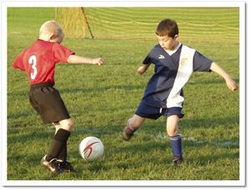
Young football players carrying long-term injuries can be a serious problem. If the players are not rested, the injury can become worse.

I know this from experience. I played a whole season with a heel injury and, because it got no rest, I spent the following summer in pain. It was a ‘nothing injury’, or so it seemed at the time.

Injuries need sufficient rest

You will find your players are so keen to play, they will not tell you they are carrying injuries, or if the doctor has told them to rest for a couple of weeks. They will not want to miss matches during the season, especially if you are on a winning run.

Heel injuries are quite common and I now know that a lot of them, mine included, are a result of the high backs on soccer boots. These rub the back of the heel causing pain. The cure is to make two cuts into the back of the heel of the boot to make it less rigid.

It’s a great tip that someone gave me, and it has worked for me, and a lot of the players in my team who have suffered from heel problems.

You have to be careful when parents and children cover up injuries. They may not want to miss the all important match, but they cannot play if they have been told to rest.

It’s hard for you as their football coach if you do not know the extent of the injury and have to rely on parents. On one occasion, one of my best attackers had hurt her ankle - playing hockey - and couldn’t play in a key game. She had been told to rest by the doctor.

In the first game we played without her, we were drawing 2-2. Her mom came over and asked me if I wanted to put her daughter on. “She’ll be all right,” she said. The player herself was begging to be let on.

However, I had to say no, despite their protests that we would lose without her. Her well-being came above winning.


8 Comments

Soccer Coaching Tips to Help in Fitness Training

9/28/2011

6 Comments

 
Picture
Here are three soccer coaching tips that are worth remembering when trying to maintain fitness or recover from injury.

Don’t run through a stitch

The stabbing pain in the tummy, otherwise known as a stitch, means that a player has taken on too many carbohydrates before  starting training. This normally means too much pasta, maybe an hour or so earlier, or after a big meal. What has happened is that there is a sudden rush of sugar, increasing the amount of insulin the liver has to cope with. The liver squeezes and this is where you feel the real pain – the stitch.

Action: you should not run through a stitch. The pain will mean that you are not able to maintain a proper body shape and might cause you to injure yourself in another way. It is simply a case of stopping and waiting for the pain to subside.

Loss of performance through loss of water

It only takes a loss of three per cent of water from the body to impair the performance of most normal soccer players. Rehydration, the replacement of lost water, needs to occur at regular intervals, normally every 15 to 20 minutes. Ideally you need to replace the same amount of water with each drink.

However this sort of rehydration does not represent the game situations where water intake is not as controlled. If possible it is better to train as you play and this goes for rehydration. The body adapts through training to the conditions set, therefore benefiting the soccer player when they play in the game.

Sleep repairs your muscles effectively

Most muscle repair occurs while you are asleep. This happens through something called deep orthodox sleep. Deep orthodox sleep lasts for 20 minutes on average and happens at most four or five times a night, but on average three times. You need five cycles to give the maximum muscle repair. A good night’s sleep is when you reach that five cycles, but for most that means two nights of sleeping well to get fully repaired muscles.

6 Comments

Tips to deal with bullying on your team

9/27/2011

1 Comment

 
Picture
There is no place for bullying anywhere in life. If you are aware of bullying in your soccer (football) team you must address it immediately because of the wide-ranging consequences for the individual and the team.

Good practice

You should have a bullying policy at your football (soccer) club, but it is even better to deal with the problem before it starts.

Be aware that bullying can have small beginnings, so stamp out any minor indiscretions at soccer coaching sessions or matches immediately.

Be a presence in places where groups can gather. Listen as you wander around the soccer coaching practice.

Reassurance is quick, but don’t take a simple answer that the player is OK to mean that he is not under pressure.

Victims of bullying are often “easy” victims. In other words they have weaknesses which can be exploited, such as weight, lack of skills or communication problems. Don’t put these players in compromising positions in training.

Recognise the signs of bullying

A bullied player’s behaviour changes - look for signs that youngsters are becoming withdrawn or reluctant to get involved. They might stop coming to soccer (football) training for no reason or start making excuses not to train or play.

You might notice that they have stopped taking part in the banter with other players or have become the butt of their jokes. It might just be that they are left out and not passed the ball during games and soccer coaching drills.

1 Comment

Skills and Tips for Coaching Youth Soccer Players

9/26/2011

1 Comment

 
Picture
The art of coaching youth soccer requires one thing in abundance... enthusiasm. It's your most important quality. Kids will respond to you if you're an eager, hard working leader. Some kids find learning boring, some don't care about winning, and some can't remember which goal they're kicking towards. But what unites them is the desire to have fun and play a game. This is our blueprint for successful soccer coaching.

Think first

Think about why you want to be a soccer coach and what you want to achieve from your soccer coaching drills and training sessions. Gain trust and respect. You are a role model with responsibility to your team. If you set high standards for the drills, the children will follow. Be enthusiastic and make your soccer drills fun.

Praise not criticism

Be patient with your kids, you get more out of them if you praise their efforts and hard work rather than criticise. Body language is important. Smiles and positive gestures will reap rewards. Shouting will not help you keep control and many parents watching may not like it. Be consistent, set achievable goals and give lots of feedback.

Get the knowledge

If you understand the skills and techniques involved in what you are trying to teach, you will be better equipped to pass this on. Try out the soccer drills yourself, are they too hard, too easy? Demonstrating how skills and drills work is better than using words. If you can’t do a particular skill, use one of your helpers who can.

Warm-up drills and warm-down drills are essential!

You must make sure the kids stretch their muscles before and after a soccer (football) training session. Growing bodies need to be looked after. Some knowledge of how the body responds to training and how to prevent injuries is important.

Remember, you’re training individuals

Some kids take longer than others but it doesn’t mean they are not as good, you have to adapt to their speed rather than the other way around. Make sure you have equipment and kit for the whole group. Children react badly to being left out. Avoid soccer drills where some kids have to sit out. Don’t make all the games competitive.

Mind games

You are the confidence-builder for individuals and the team, set goals, control emotions, help your kids concentrate. As a soccer coach you are in charge of minds as well as your players' physical skills.

1 Comment

A Fun Warm Down game for your players!

9/24/2011

2 Comments

 
Picture
A great way to get your players to warm-down after a training drill session is by using this Aussie rules drill. Players hold the ball in their hands and volley it to pass - when they catch the ball they have to stand still before making the next volleyed pass. The opposition has to intercept the volley.

This soccer warm-down drill offers something different for your players and is a good, fun way to end a soccer coaching session.

Arrange your players into two teams. Mark out an area 30 x 30 yards with three cones at each end with a ball balanced on each cone.

·      The players must make volley and catch passing movements.

·      The aim is to get down the field and knock a ball off the opponent’s cones.

·      The player in possession of the ball must not move.

·      The other players in the team must make supporting runs and movement to receive the ball.

This warm down drill is played for a set time or until one team has knocked off all their opponent's balls.

2 Comments

BEAST MODE SOCCER TABATA TRAINING- HOW TO GET SOCCER FIT QUICKER THAN EVER!

9/23/2011

1 Comment

 
Picture
Tabata training is a Japanese form of interval training uses 20 seconds of ultra-intense exercise (at an intensity of about 170% of VO2max) followed by 10 seconds of rest, repeated continuously for 4 minutes (8 cycles).  

Beast Mode Soccer takes that training and intensifies it further by including three sets of the 4 minutes. The whole idea of this type of training is that it forces your heart to work harder, as it is constantly changing rhythms.  

Make sure that the sprint is full on, all out. The jog is meant for recovery. This is a fat burning workout. It needs to be done 5 times a week for a month, preferably 6 times a week. If you really want to go beast, try it with the absolutely SAVAGE training mask on http://www.TrainingMask.com 


If you want the full Beast Mode Soccer Tabata Training workout, email us: [email protected]
1 Comment

A Philosophy for Youth Soccer Coaches

9/22/2011

3 Comments

 
Picture
Top international soccer coaches say "determine your philosophy and run with it". Why not apply this to your youth team? It may be easier than you think. Here is a simple way of remembering some of the key soccer coaching factors that are required.

PESTS stands for parents, excitement, selection, time and success windows and sums up the elements you need for a successful youth soccer coaching philosophy.

Parents

Regular communication. Parental influence plays an important part in the mental and physical well-being of your players in soccer training and on match day. A handout of the “parental responsibilities” at the start of season is not enough. Arrange regular meetings so key points can be reiterated and worries shared.

Future soccer coaches. Part of your philosophy should not just be about developing the players, but also the coaches. And parents of current youth players are ideal candidates, not necessarily to start now, but in the future. Can you turn one of your parents into a soccer coach?

Excitement

Fun, fun, humdrum. Does every soccer coaching session need to be fun? Don’t get caught in this perception because it is not going to be possible every time. Why not adopt “excitement” as a better philosophy.

Challenge the skill level in your soccer drills by putting pressure on the players. Turn skills into games, but don’t become a slave to the call “Coach, when are we going to have a game?” A way round this is to start with a game, highlight a problem (useless tackling, hopeless passing!) and take them into a soccer drill, before returning to a game

Selection

Rotate scientifically. One of the biggest reasons for player drop out is non-selection. In surveys, young players say they would rather be selected for a bad team than not selected for a good team. Keep selection scientific, in other words, use a system which gives players equal game time as far as possible.

Best team time. Identify a couple of games a season (or a cup run) as “best team time” when you will select the best players. Tell the players and parents early, so help to avoid clashes with other commitments. Best team can act as an incentive for players. But don’t revert to a “bad team” in some of the other games, because this has very little merit.

Time

Start on time (and tell the parents). Children are rarely late, parents are. Clear starting times (and finish times), help you plan and deliver the session effectively, and this needs to be reinforced with parents.

Encourage the children to encourage the parents. Give them help in organising the “lift” to training and games. Use slips of paper or group text messages with directions and timings, and remind players to get their kit ready the day before it is needed.

Success windows

“Winning isn’t everything, it is the only thing”. Regional champions of anything is an achievement. Any coach who has made it this far will tell you that they had some close scrapes along the way. What does that tell you? A bad decision or some illness at a stage in their progress could have meant no cup. A slight slip and the goal, or measure of success has not been reached.

Instead, try having a “success window” for the season. This means a lower limit and an upper limit of time for the measure of success to be achieved, say between four and eight weeks. Can be for both team and individual.

Thanks for reading, we've also ALMOST finished our 'Ali Riley Footwork Program' video, check out the teaser below:

3 Comments

Fun Game to Teach Soccer Moms and Dads How to Help

9/21/2011

0 Comments

 
Picture
If you want success as a coach you have to make sure all the elements of your team go together and parents are a very important part of this success. They have the ability to make or break your season. You not only need them on your side, you need them to support and help your players at the side of the pitch.

Tips for handling players' parents

One of the ways I get parents to see how important it is to encourage their children on the pitch is to use a spot of role reversal! Set up a game with the parents on the pitch and your players on the side and get the team to shout advice at the parents. It's a good bonding drill and a good way to show parents how they must be positive not negative towards the players.

Call a meeting of your players' parents and tell them to bring their trainers. Start by laying down the laws for behaviour at matches - this is one of the most important things you will do. Parents like discipline and guidance.

End your soccer coaching session by making the parents play a short match.

Tell the parents to sort themselves into two teams and get your players to stand on the sideline and scream and shout at them like parents do at matches. The children will love doing this.

Get them to play a short game - 5 minutes each way - with the

children shouting from the sidelines.

Add some confusion yourself by shouting “CLEAR IT” or “SHOOT!”

After the game ask them what they could hear from the sidelines. Most will say "it was too difficult to listen when I was trying to concentrate". Then ask them what they think their own children hear. They should see that reacting to situations is hard enough without being shouted at.

For the parents who did hear what was said - often what you, the coach, shouted - ask them if this instruction or direction helped them.

Point out that only thing that yelling directions or instructions to a player accomplishes, is to distract them from their focus.

By showing the grown ups how it feels to be a player, the soccer moms and dads should realise that shouting at the players is not a positive way to be. Some parents will still yell their heads off, but they have been taught a lesson in using positive language and the majority will have learnt something from their involvement in this soccer coaching session.

0 Comments

Cristiano Ronaldo scientifically broken down

9/20/2011

3 Comments

 
This is an amazing documentary on Real Madrid's Cristiano Ronaldo, one of the best players in the world. They basically break down everything he does into a science format. And guess what?... He's that good because he trained more than most when he was a kid!
3 Comments

How to deal with parent complaints!

9/16/2011

0 Comments

 
Picture
I always say that the players are the easy part about our job... the difficult part is the parents! Almost every parent occasionally disagrees with your decisions as a soccer coach (whether or not you hear about it). Usually, the parent is simply putting the interests of the child first - and seeing things from the child's point of view. The following soccer coaching tips can help if this situation arises in your team.

Most parents don't complain, and are more likely to leave the team if they are unhappy with how things are handled. So, it is good to have parents who will bother to give you feedback (even if it can be painful to hear).

Most of the time, this feedback is well-intentioned - and the parent simply wants an explanation for what has happened or wants to offer some suggestions about alternative ways to do things. Most of the time, this advice is well-intentioned (and the parent had no desire whatsoever to take over the team - or to try to order you around).

What parents want

Most parents have two objectives when they sign the child up: for the child to succeed and for the child to be happy. If you praise the child in front of the parent, you can rest assured that the child will give you a big grin - and you earn points in both columns. Do this as often as you can - and you will keep gripes to a minimum.

Any time that you start resenting the time that it takes to give this positive feedback, tell yourself that you could easily be spending double this time - and a lot less happily - talking to just one upset parent! In short, a good soccer coach makes the parents believe that they have wonderful, successful and happy offspring - which causes the parents to believe that the coach must be an absolutely brilliant judge of children.

Time to discuss problems

But, of course, you cannot please all of the people all of the time - and you may end up with a complainer or advice-giver despite your best efforts. If this happens, listen briefly to find out what the problem is, then schedule a time to talk about it. NEVER discuss any serious problem right before a drill session (or before a game). You have work to do, and don't need the distractions (and certainly don't need to be upset yourself if any harsh things are said).

Furthermore, if the parent is really upset, you don't want any confrontation to occur in front of your players or other parents. So, set the discussion for the end of drill practice - or schedule a time to call the parent later (if this is something where the child does not need to hear the conversation).

NEVER discuss any problems or complaints right after a game. If a parent comes to you with a complaint right after a game, make up any excuse that you can and get out of there. Usually, these complaints come after a hard game and a hard loss, when everyone is upset. Give everyone time to cool off - so that things are not said which are regretted later.

Soccer coaching communication skills

When you do talk to the parent, listen carefully to the parent's problem. Be calm. Try to get them to see things from your point of view. If at all possible, lavish some praise on the child during the meeting (remember parental objectives). Try to verify their reports that the child is unhappy (for instance, some parents want their child to be the goal-scoring star, while the child truly is happiest as a keeper or sweeper).

Volunteer to have a meeting with the parent and the child to talk about the situation. If the child truly is upset (for instance, he wants to be a forward, while you have rotated him to the back because he sorely needs to develop some defensive skills), talk about why you think that this is best. Usually you will be able to resolve complaints by open communication, and a calm approach to the problem.

Involve the club

However, some parents simply will not be satisfied, no matter what you do. This happens quite commonly with parents who were athletes, and ended up with non-athletic children, where it is easier to cast blame than to face reality about the child's lack of skill and talent. If it is clear that you are not getting anywhere, suggest that you set up a joint meeting with club officials to talk about the problem. In the meantime, call the club to give them a “heads-up” that they might hear from this parent, if it appears that the parent is truly irate.

If worse comes to worse, take heart that “parents-from-hell” tend to stick around for only a short time. Usually, you will find that they have been very unhappy with every coach whom their child has ever had - so they go back in the pool every season. In fact, don't be surprised if, when you call the club, you hear a large sigh come out of the phone - along with a comment of “Oh, no. Not them again.”

0 Comments
<<Previous

      JOIN THE 
      BEAST MODE SOCCER
      MAILING LIST FOR FREE DRILLS AND UPDATES!

    Submit

    Beast Mode Soccer

    David Copeland-Smith is a UEFA 'A' Licensed soccer trainer with a unique outlook on how players should learn the game...

    Archives

    January 2013
    September 2012
    August 2012
    July 2012
    June 2012
    May 2012
    April 2012
    March 2012
    February 2012
    January 2012
    December 2011
    November 2011
    October 2011
    September 2011
    August 2011

    RSS Feed

OUR SERVICES


Elite 1 on 1 Training
Online Development Academy
The Better Soccer Blueprint
Total 90 Video Analysis 
Coach Education

COMPANY


About Us
Contact Us

SUPPORT


FAQ
Terms of Use
Picture
© 2014 All right reserved Resteto Template by Wall Themes.
Powered by Create your own unique website with customizable templates.